Color Woodland Animal Student Clipart: A Versatile Digital Resource for Creative Educators and Makers
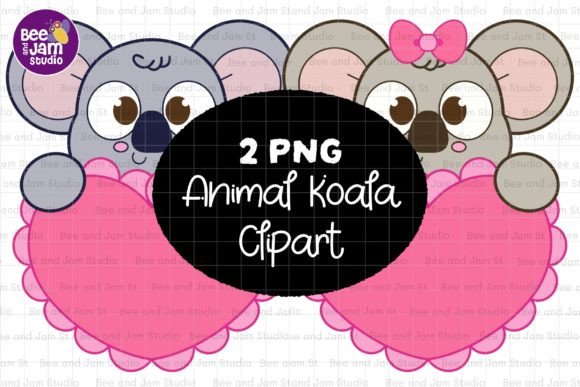
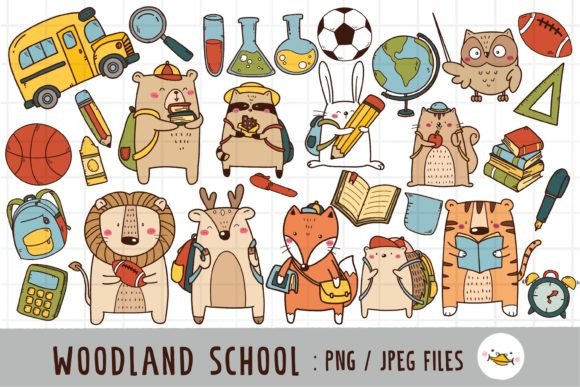
Color Woodland Animal Student Clipart is more than a themed collection—it’s a thoughtfully curated digital toolkit designed to bridge pedagogy, personal expression, and professional design. Comprising 30 original illustrations—each rendered at print-ready resolution (300 DPI) and sized between 6 and 10 inches on the longest side—the set features beloved woodland characters including bear, fox, raccoon, rabbit, lion, tiger, koala bear, and deer, alongside contextual elements like trees, leaves, flowers, and nuts. What distinguishes this collection is its dual-format delivery: 30 high-fidelity JPEGs with crisp white backgrounds and 30 transparent-background PNGs—both optimized for immediate use across physical and digital workflows.
Why Format Flexibility Matters in Real-World Applications
The inclusion of both JPEG and PNG files isn’t merely a technical formality—it reflects an understanding of how creators actually work. JPEGs serve reliably in printed materials where background consistency matters: think classroom posters, student award certificates, or laminated behavior charts. Their white background ensures clean alignment with standard paper stock and avoids unintended transparency artifacts during home printing. PNGs, by contrast, empower layered digital composition. Educators building interactive Google Slides lessons can drop a raccoon holding a pencil over a custom worksheet background without clipping or edge halos. Crafters designing vinyl-cut stickers for planner inserts retain full control over color layering—placing a flower-bearing fox atop a hand-drawn border or watercolor texture with pixel-perfect fidelity.
This format duality also supports accessibility-conscious design. When adapting materials for learners with visual processing differences, educators can isolate clipart elements using the transparent PNGs and reposition them against high-contrast or muted backgrounds—something far less feasible with fixed-background JPEGs. Likewise, curriculum developers integrating visuals into screen-reader-friendly PDFs benefit from clean vector-like edges and uncluttered outlines, which reduce cognitive load during image description generation.
Design Integrity Meets Pedagogical Utility
The aesthetic approach—doodle-inspired line work, gentle color fills, and expressive but non-distracting character poses—was intentionally calibrated for educational settings. Unlike overly stylized or anthropomorphized animal art that risks overshadowing content, these illustrations maintain visual clarity at small scales (e.g., 0.5-inch icons in digital flashcards) while retaining warmth and approachability. The bear wears a subtle backpack; the rabbit holds a notebook—not a weapon or snack—but these cues are light enough to avoid prescriptive storytelling. That restraint makes the Color Woodland Animal Student Clipart adaptable across grade levels: early elementary teachers use them for emotion-regulation charts (“Which woodland friend feels calm today?”), while middle school science instructors repurpose the same fox illustration as a mascot for ecology units—its neutral posture allowing reinterpretation without visual contradiction.
Notably, the set includes species beyond traditional North American woodland fauna—lion, tiger, and koala bear—introducing gentle opportunities for geography and biodiversity discussions. A teacher might pair the tiger with a map overlay activity, or contrast the koala’s eucalyptus diet with local oak-dependent wildlife. These inclusions aren’t arbitrary; they expand representational range without compromising cohesion, thanks to consistent linework weight, shared color palette saturation, and uniform negative space treatment.
Workflow Integration Across Domains
For educators managing tight prep timelines, the instant-download model eliminates shipping delays and physical storage concerns. Once payment clears, users receive a single ZIP archive containing logically named folders (“JPEG_White_BG”, “PNG_Transparent”), enabling rapid drag-and-drop into Canva, PowerPoint, or Adobe Express. No licensing negotiations or attribution requirements apply for classroom use—making it viable for school-wide resource sharing under fair use guidelines.
Hobbyists and small-business owners find equal utility. Scrapbookers appreciate the 300 DPI resolution, which prevents pixelation when enlarging a deer silhouette for a 12×12 layout centerpiece. Sticker designers leverage the transparent PNGs to create die-cut sheets compatible with Cricut Design Space or Silhouette Studio—especially valuable given the consistent 1/8-inch internal clearance around each subject (a subtle but critical detail preventing cut-line errors). Even researchers compiling visual ethnographies of childhood learning environments have cited similar clipart sets for anonymizing student artifacts: replacing identifiable handwriting samples with illustrated notebooks held by woodland animals preserves confidentiality while retaining conceptual meaning.
Practical Considerations for Long-Term Use
While the Color Woodland Animal Student Clipart excels in versatility, thoughtful implementation requires attention to three practical dimensions: scalability, context alignment, and ethical reuse.
- Scalability: Though each file is delivered at 6–10 inches (ideal for posters or large prints), users should avoid extreme downsizing below 1.5 inches in digital displays—fine details like leaf veins or nut textures may blur. For tiny UI elements (e.g., app icons), selecting bolder compositions—like the front-facing bear or simplified tree outline—is more effective than compressing intricate scenes.
- Context Alignment: The collection’s strength lies in its neutrality—not its specificity. It does not include school-specific props (e.g., chalkboards, numbered lockers) or culturally coded symbols (e.g., graduation caps, specific uniforms). This absence is intentional: it invites users to project their own curricular narratives rather than conform to preset assumptions. However, it also means supplemental assets may be needed for highly contextual projects—say, illustrating a “first day of kindergarten” sequence.
- Ethical Reuse: The license permits unlimited personal and commercial use—including resale in physical products like greeting cards or printable planners—but prohibits redistribution of the raw files or claiming authorship. Creators embedding these into editable templates (e.g., Notion dashboards or TPT resources) must ensure end users cannot extract or redistribute the original PNGs/JPEGs. Password-protecting download links or flattening layers before distribution are common, low-friction safeguards.
Emerging Uses Beyond Traditional Boundaries
What began as classroom-support material is evolving into infrastructure for broader creative ecosystems. Therapists developing social-emotional learning tools use the raccoon and fox pairings to illustrate perspective-taking exercises—“How might the raccoon feel seeing the fox climb the tree?”—leveraging familiar forms to scaffold abstract reasoning. Museum education departments incorporate the leaf and flower illustrations into tactile storyboards for visually impaired visitors, pairing raised-line prints with braille labels. Even urban planning interns tasked with designing child-friendly public space signage have adapted the deer and rabbit motifs to symbolize habitat connectivity—proving that well-executed, semantically open clipart transcends its initial category.
Perhaps most significantly, the set demonstrates how “cute” design need not sacrifice sophistication. The deliberate avoidance of gradients, shadows, or complex textures ensures compatibility with budget printers and older devices—yet the confident linework and balanced color blocking yield results indistinguishable from premium illustration services. This balance—between accessibility and artistry—is where the Color Woodland Animal Student Clipart distinguishes itself from trend-driven alternatives that prioritize novelty over longevity.
Implementation Tips for Maximum Impact
Getting the most from this resource hinges less on quantity and more on intentional selection. Rather than defaulting to the most detailed image (e.g., the fox mid-jump holding three acorns), consider compositional function:
- For headers or banners: Choose subjects facing forward with clear negative space above (e.g., seated bear, upright tree) to accommodate text overlays without obscuring key features.
- For step-by-step instructions: Use sequential poses—rabbit writing, rabbit erasing, rabbit smiling—to imply progression without needing arrows or numbers.
- For inclusive representation: Rotate or mirror images (supported natively in most design software) to vary orientation—e.g., flipping the deer to face right instead of left introduces subtle visual diversity without altering assets.
- For multilingual classrooms: Pair images with translated keywords instead of English-only labels—using the koala as a visual anchor for “koala / kōālā / koala” reinforces vocabulary through repetition across scripts.
In essence, the Color Woodland Animal Student Clipart functions not as decorative filler, but as a visual language—one with grammar (consistent proportions), vocabulary (recognizable species and objects), and syntax (implied relationships between elements). Its value emerges not in isolation, but in how seamlessly it integrates into existing systems of teaching, making, and communicating—without demanding overhaul, only thoughtful invitation.